Tag Archives: hong kong

Welcome to Shenzhen – where the pollution comes from

20 Sep

Shenzhen skylineI had the honour of a few days in Shenzhen this week. For those of you who don’t know, Shenzhen is Hong Kong’s younger brother across the border in mainland China, about an hour’s MTR ride away. He doesn’t suffer fools gladly, he’s brash, dirty, full of money he doesn’t know what to do with but on the plus side has a very clean and efficient metro system. That last one was just about the city.

Shenzhen is the product of former Communist Party supreme leader Deng Xiaoping’s vision to liberalise a country brought to its knees by his boss for so many years, Mao Zedong. Deng’s idea was to set up Special Economic Zones which would act as a kind of canary down the mine and see if the Communist state could pull off the immense balancing act of maintaining its totalitarian rule while allowing capitalism to thrive. In just 30 years the small village on the Pearl River Delta grew to a city of 14 million. Yeah, you could probably say it worked.

Except, arriving in Shenzhen from Hong Kong, it definitely hasn’t. It’s provides a horrifying insight into the kind of cities dotted all over the People’s Republic – all mouth and no trousers. So bereft of any cultural history it makes Hong Kong look like Kyoto. Actually, it make Vegas look like Kyoto.

What it does have, however, is shitloads of fake stuff. From knock off iPhones to Gucci handbags, it can be a shopper’s paradise, which is ironic considering most mainland Chinese come to Hong Kong to shop for their label goods because of the lower tax there. That’s legit stuff though, this is most definitely tat with a capital T. Just don’t expect much of it to last.

Don’t go to Shenzhen either for a gourmet experience of the ‘real China’. The restaurants I ventured in – and I went to some pretty swank ones – were universally dreadful. All of them smelled very strongly of fetid antisceptic wash and stale smoke, food arrived barely warm and just not right. Maybe I am too programmed into Hong Kong’s niceties. Or perhaps I was immediately put off the place by getting embroiled in the middle of a massive anti-Japan protest as soon as I stepped of the metro.

I’ll give the Chinese something, though, they know how to run a police force. This lot made Judge Dredd look like that bender from Allo Allo. All kitted out in the latest riot gear – I would have taken a few pictures but was quite frankly terrified. So, in recap, if you want to find out why you can’t see from one side of Victoria harbour in Hong Kong to the other if the wind’s blowing the wrong way, take a trip to Shenzhen. If not, well…

It’s erection time in Hong Kong – get your poll face on

8 Sep

If you’ve tutted yourself to sleep over the past few days bemoaning the woeful state of British politics, and then woken up again screaming at the thought of failed bell-ringer Jeremy Hunt in charge of the life or death of the NHS, spare a thought for Hong Kong.

It’s erection, sorry, election time here and the streets are filled with sinister looking people smiling, waving, handing out leaflets and leaning out of curb-crawling cars bawling into loudspeakers. They could be politicians but they look more like members of a particularly unforgiving cult.

Now, Hong Kongers are particularly passionate about their democractic voting rights – well you would be after having basically been denied them under colonial rule and with the one-party shadow of the motherland China casting an imposing darkness over all. People turn out here in embarrassingly large numbers, putting established democracies like good old Blighty to their eternal shame, although the problem is the elections aren’t really democractic.

The boss of HK, CEO CY Leung, for example, wasn’t directly elected by the people but chosen by a mainly pro-Beijing bunch of businessmen selected for the job. Then there are this week’s elections for legislative councillors. The LegCo, as the ‘parliament’ is known, has been expanded from 60 to 70 seats but only half are directly elected, the rest being divided into functional constituencies representing various professional sectors. Not everyone gets to vote for the latter, with professional bodies granted block votes which kind of distort any sort of democratic accountability said seats would have. Also, the voting system is quite frankly baffling and no amount of even more confusing TV ads mouthed in cheery voices – which have been running almost non-stop in the past fortnight – will change that.

Anti-Beijing sentiment has been rising in Hong Kong, and if enough pro-democracy legislators are elected on Sunday then universal suffrage could be introduced as slated in 2017 – if not then pro-China parties could block such a decision. If there’s one thing the folks here don’t like, it’s being told what to do, even if it’s for the greater good of a unified Han empire.

That anti-Beijing sentiment has bubbled up most recently in the form of protests at the planned introduction of national education classes in schools. It has been on the cards for years, but that shit is only now getting real, with the fear that, if introduced, these “patriotism classes” will indoctrinate young’uns in the ways of the Dark Side, sorry, teach them to love communist China and all it stands for. Several people are already on hunger strike…it’s all getting rather tense. Although schools ultimately have the final say on what they teach, no-one knows how rigorously these ‘suggested’ guidelines will actually be implemented. One school has even forbidden parents from seeing the curriculum, which doesn’t inspire much confidence.

These people aren’t paranoid, well they might be a little, but as the old saying goes: “Just cos you’re paranoid don’t mean China’s not watching you.” The insidious pro-Beijing bias is seen no-where more blatantly than in this TV news piece, on Hong Kong TV mind you, which rather obtusely tries to lay the blame of the national education protesters on foreign interference. Crazy.

China vs Japan – which is better? There’s only one way to find out…

25 Aug

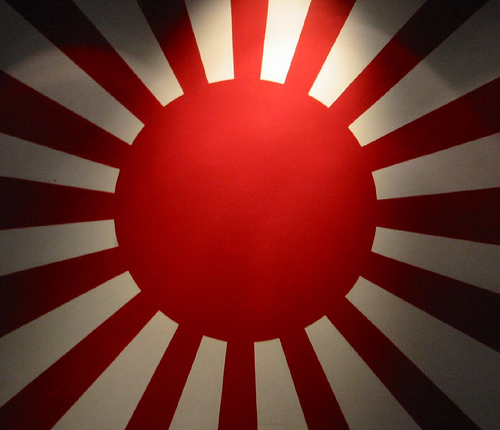
japan imperial flagYou might have heard recently about a bit of diplomatic aggro between China and Japan. I say a bit. I mean what may in 20 years’ time be referred to as “the origins of World War Three”. As with most disputes in Asia Pacific, it revolves around a disputed set of rocks. Literally little more than jagged stubs of nothingness poking wilfully out of the deep, shouting “claim me, if you DARE!”.

Now, you might hear a lot of nationalistic posturing on both sides about their rightful claims, but here’s the deal. I can pronounce the islands in Japanese – Senkaku, since you ask – while I have more difficulty, as with most words, with the Chinese Diaoyu. This, in my book, means Japan wins by default – if half the planet can’t pronounce the pesky name then you forfeit sovereignty rights … is the new rule I’ve just made up.

Ironically in this instance, and for about the first time in such disputes, I think China probably has the more valid claim. If you look on the map, the disputed lands are bloody miles away from Japan – Taiwan has a pretty valid claim on them too, but definitely not Japan. I say ironically because China claims just about everything in the South and East China Sea because it has an old map with all of these islands, atolls, reefs and sandbanks depicted as belonging to the Middle Kingdom.  Not very convincing if you ask me but who’s going to argue with China? Well, Vietnam, the Philippines, Taiwan, and Japan, now that there are signs that there could be precious minerals or even gas and oil under the crabby bits of rock.

As tensions mounted over the Senkaku dispute, a boat full of Chinese and Taiwanese activists sailed off from Hong Kong to plant the Chinese (and Taiwanese) flags on them. Now I found this propaganda stunt particularly, err, fishy given that Hong Kongers in my experience do not consider themselves to be a part of that whole Chinese territorial posturing nonsense. Yes, they may feel ethnically aligned to their cousins across the border, but when it comes to geopolitical matters, they would rather remain aloof of China’s insatiable land grab. They are happy in their difference from the PRC because it means they can hang on to things – rule of law, press freedom, financial independence, freedom of speech etc etc – that mainland Chinese can only dream of.

The whole thing smacked of a Communist-sponsored PR stunt – making sure the activists came from Hong Kong to distance the act itself from the PRC, but still showing Japan that the government has popular support for its territorial stance.

Anyway, long story short, no-one in this or any of the Asian maritime squabbles that have erupted over the past few months have particularly covered themselves in glory. What there needs to be is some kind of international arbitration in all this, some kind of union of nations which could decide on who gets what. A United Nations, if you will. Oh, wait a minute. There is.

Olympic Fail, Hong Kong style

10 Aug

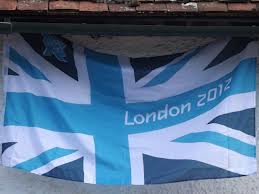
london flagWhat an epic two weeks of sport eh? I love how London is revelling in its position at the centre of the world again – its stately monuments and beautiful city-scapes beamed across the planet to the envy of, well, people, everywhere. I’m loving how the worst premonitions of a Games dominated by greed and dirty commercial interest has given way to the sheer unadulterated joy of Great Britain suddenly, collectively, realising it is great at something – two things actually – putting on a show and winning at sport. Yeah, for all our cynicism and shoulder shrugging, we do actually like to see our boys and girls kick some ass – even if it is at mainly sitting-down sports like horse gymnastics and cycling.

I say I’m loving all this of course but I can’t really comment since Hong Kong TV isn’t showing a BLOODY THING! I take that back, if endless table tennis and badminton matches are your bag then you’ve come to the right place. It is an unmitigated, shameful broadcasting disaster with the laughable banner “A Games for All”. Err, not quite. A Games for none of the tens of thousands of TV subscribers on the island that aren’t locals. Even the most biased domestic broadcaster surely has some kind of public interest remit to switch occasionally to see what the host nation’s up to?

Nope, not a bit of it here. Not even a sniff of Andy Murray’s amazing men’s tennis final, zero football and virtually no track and field. To add insult to injury, the bi-lingual commentary in the studio involves the English anchor team relegated to what looks like a glass-fronted break-out room on a mezzanine behind the main presenters – you can just about see them if you squint really hard.

So that’s my Games. Am probably better off following Samuel L Jackson’s excitable Tweets than switching on Hong Kong TV. Still, hope you’re having fun. I wonder if I can apply for a refund on my London Council Tax for the past decade?

Beijing and Hong Kong – a week of storms

30 Jul

typhoonYou might have seen there’s been a spot of rain in China over the past week or so. I don’t think it would be exaggerating to say it was absolutely twatting it down. The most interesting thing about Bejing’s deadly floods and Hong Kong’s rather camp typhoon, however, is the damage each did and how the authorities handled the aftermath.

I’m not going to launch into another China-slagging post here because the facts pretty much speak for themselves. The ‘worst floods in six decades’ hit Beijing. Apartment ceilings caved in, inadequate sewers and drainage systems collapsed, 70+ people died. How can 70 people die in 6.7 inches of rain? Well, that’s what millions of angry social media users wanted to know, and let their anger at local government be known via the usual weibo channels. Until the posts began, sadly and predictably, to be deleted. Almost a year to the day after the deadly high speed train crash which sparked a weibo backlash over government incompetence, the authorities’ response is still to censor first, think later.

In what seemed like an unusually speedy response to public opinion, Beijing’s major and deputy resigned. However, read between the lines, and Communist Party politics, and the deadly floods were more likely being used to justify a decision which had already taken place in a closed door Party meeting. many moons previously. No-body’s sure exactly why they went so quickly, they just know that it wasn’t an honourable mea culpa.

Cut to Hong Kong a few days later. I looked out of my window at 3pm and saw sideways rain. At about 5pm office workers were told to go home as typhoon Vicente was coming to play, and a no. 8 signal hoisted. Later that night, as the wind grew, a no. 10 signal was raised, forewarning 100mph winds, a near direct hit and the worst storm since ’99. So what happened? Death and destruction? Organisational chaos and government turmoil? Nope. A bit of flooding. About 100 injuries from flying debris. Delayed trains. All was back to normal by about midday the next day.

Oh yeah, and we were all allowed to tweet and weibo about it. Not that there were many complaints – a few people got stranded on MTRs, but nothing too extreme.

Now I know it’s not really fair to compare the two extreme weather conditions, or the two cities. And I know that it’s perhaps unfair to judge Beijing’s local government based on this incident, given they endured a spectacular drenching for a city normally more used to sandstorms and smog. But I’m gonna anyway. Beijing’s big play at the 2008 Olympics was “I’m here, I’m queer”…no, hang on.  It was more: “I’m a modern, global capital. I have the money, the infrastructure and the balls to shake things up around here. Gaze on me with envy London, New York, Berlin. I’m the shit. Yeah.”

Except it was bluffing. As with China as a whole, it grew at such a pace of knots that a lot of the important stuff was forgotten: human rights, environmental protection, the rule of law … proper drainage. We can sit back all smug in the West, and especially in London, as it hosts this year’s Olympics. We’ve had our industrial revolution. Hong Kong too has come through its steep learning curve and thanks to international finance, British know-how and Chinese industry is now one of the best places to live in the world.

The Chinese govt will surely throw billions at Beijing in response to what happened last week, but whether on purpose or not, vital stuff will still get missed off that list.

China sending out mixed skirt signals

17 Jul

stripperWhat do you get if you cross summer-time in Hong Kong with a group of morally retarded politicians? Answer: a list of the most dangerous places in the SAR for women to walk around in short skirts.

Yup, the pro-Beijing Democratic Alliance for the Betterment of Hong Kong, or rather its drearily titled Women’s Affairs Committee, has released its latest list on Peeping Tom black spots.

The list, which incidentally would also serve as an indispensable guide for dirty old men in the region, details quite specifically the escalators, glass walkways and staircases where scantily clad locals are most at risk.

Rather hilariously, the now iconic Apple Store staircase designed by Steve Jobs himself comes in for a bashing by the DAB – is nothing sacred?

I’ve never heard of this kind of moral crusade by a political party in the West and can only imagine the DAB espouses the kind of retarded conservative values that would rather women wore ankle length coats at all times to avoid these kind of problems in the first place.

After a bit of digging, I found that it’s been releasing these lists for at least three years – every time with the same old spiel – camera wielding perverts are on the rise and represent a real and present danger to the honour of our young ladies.

It’s often said that China is a nation of contradictions, well, looking in the Shanghai Daily this week this became immediately clear.

It reported news that the gloriously named Guilin Merryland Resort in southern China is currently offering half price entry to women wearing skirts shorter than 38cm.

Apparently, local TV footage has shown long lines of female visitors queuing up for the discount, waiting to be seen to by a member of staff holding a ruler.

The park is also said to run a “water-splashing festival” during which visitors are encouraged to throw water over each other, including of course the skimpy-skirted women.

China. You’re sending out mixed signals here – do you want girls to wear short skirts in summer or not?

Maybe this is what they meant by ‘one country, two systems’.

Hong Kong turns 15, hacks revolt

3 Jul

Hong Kong colonial flagHong Kong. It’s easy to forget sometimes staring goggle-eyed at the splendorous neon-skyscrapered waterfront or ambling through the whore-infested byways of Wan Chai that this is part of China.

The special administrative region (SAR) turned 15 on Sunday. Well, its new life as an autonomous part of the People’s Republic turned 15 – and like all teenagers it’s getting increasingly riled with its parents.

As new CEO CY Leung was sworn in by Chinese president Hu Jintao hundreds of thousands took to the streets to protest the appointment of their new leader – done far away from the troubling spotlight of democratic elections – whom they view as an agent of Beijing, despite his claims to the contrary.

Several protestors even carried proudly aloft the old colonial Hong Kong flag – a symbol of “all we have lost”, they said – while another was bundled into a police van after rudely heckling Hu’s speech.

Back in pre-’97 times democratic rights were similarly limited, but personal freedoms, human rights and the rule of law were more securely anchored. Many feel, rightly or wrongly, that Beijing has gradually chipped away at these things which Hong Kongers had come to take for granted.

One thing they could also be more sure of back then was a free press unfettered by direct or indirect pressure from Beijing.

Looking at some of the anodyne stories in the South China Morning Post these days – most notably the reporting of Chinese dissident Li Wangyang – it’s not hard to see why most Hong Kong dwellers now think the press is actively engaged in self-censorship.

The SCMP faced angry protestor at its gates and a petition signed by staff after it downplayed news of the suspicious death of Li a few weeks ago.

In addition, almost 90 per cent of HK journos think press freedom has “deteriorated significantly” under the outgoing administration, with the government accused of tightening its grip on information by restricting the number of events accessible to reporters and increasing off-the-record briefings.

President Hu did nothing to quell any such fears in his speech at Leung’s swearing in ceremony, as the China Media Project blog picked up:

[We must] adhere to and implement a fully accurate ‘one country two systems’ policy, acting in strict accord with [Hong Kong’s] Basic Law, combining the priorities of upholding ‘one country’ while respecting differences in the ‘two systems,’ preserving the authority of the central Party and ensuring a high-level of autonomy in the Special Administrative Region, preserving overall national interests and ensuring various interests within Hong Kong society, supporting Hong Kong in actively developing international exchanges and opposing interference in Hong Kong affairs by outside forces . . .

These ‘outside forces’, according to the Hong Kong Uni-based project, are journalists, web-based loud mouths and any others who say things in public that powerful people don’t like the sound of.

Stuff like this, then, probably.

I’ll get my coat…

Hong Kong TV is rubbish

27 Jun

tv setI sometimes catch myself longing for the good old days. I know everyone does but it always comes as a bit of a surprise as I was adamant at the time I bloody hated it. The days when Geordies formed the creative heart of our nearly teams in Italia 90 and Euro 96; when summers in the garden lasted forever; when tea was always on the table when you got back from school; and, quite frankly, when life was something that would probably take shape once all the laughing had finally stopped…

Back then I watched an inordinate amount of telly, due in no small part to there being no internet, and therefore no internet porn, available, and the remembrance of TV shows is usually all it takes to kick-start another nostalgia fest. I especially loved the public service adverts of the 70s and early 80s.

As Charlie Brooker has pretty much dissected these to within an inch of their lives I won’t revisit old ground, suffice as to say these sometimes sinister, sometimes hilarious pieces of inter-programme fluff were the backdrop to my early yoof. They have pretty much disappeared from our screens in the UK, aside from the odd warning on Scotch TV about indulging in too much offal, heroin and Buckfast, but the same is most definitely not true in Hong Kong.

Now I hate to use the term ‘Nanny State’, but the public service adds here do a disservice to the intelligence of the public. I cannot imagine, for example, why one should need reminding about leaking air conditioning units, illegal ‘temporary structures’, the dangers of letting your kids watch TV unaccompanied by an adult, or why everyone should THINK TWICE before “authorising others to handle their London gold account”. Even an ad warning of the dangers of ketamine – possibly valid – ends up straying into hilarity as the kids who takes the evil horse tranquiliser is depicted wetting himself on a merry-go-round. Brilliant.

Other broadcasting gems include one ad purporting to show parents the right way to pay for their child’s education – ie not to a dodgy looking geezer claiming to represent a school you’ve never heard of and carrying a bag marked ‘swag’. Or how about that old classic, unlicensed columbaria fraudsters? Yes, apparently part-time crims are lying in wait at your local cemetery to sell you plots to place your dear departed’s ashes which are not theirs to sell. Seriously. There is a TV ad for this!

Being as I have the cheapest TV package available, I am treated to the wonders of Pearl and ATV here in Hong Kong, which means re-reruns of Desperate Housewives and CSI interspersed with desperately bad Chinese shows translated into halting English such as Ramble Round the Southern Guangdong Green Way, or, one for the kids, Ming the Minibus. And Monday night wouldn’t be the same without Korean Hour, sponsored by the Korean Agriculture and Fisheries Ministry. Bring it on.

June 4 – why they’ll never forget

9 Jun

victoria park candelight

(Pic: Associated Press)

There are some things in Hong Kong which, every so often, take your breath away. A clear day from the Peak, sunset over Wu Kai Sha, a dog wearing booties and sunglasses. Even for a cynical old bastard like me, last Monday’s June 4 memorial gathering in Victoria Park for the fallen of Tiananmen was pretty special.

It took us about 30 minutes to get the few hundred yards from Causeway Bay MTR to the park. The route was loud and boisterous, campaigners shook banners with angry zeal, rattled collection boxes and pressed pamphlets into our hands. I concentrated mainly on not having my sandaled feet stomped on in the crush and shielding my ears from the incessant barrage of the loud speakers.

By the time we got to the park, it was already full to bursting as dusk descended on another hot, sticky Hong Kong night, just as it had done 23 years previously. Then, of course, the troops had already entered Tiananmen Square, on the orders of leader Deng Xiaoping, who told them to clear the area of student democracy protestors at all costs. The army was told the students were trying to destroy China, and in a way they were, for the ideas they promoted could never co-exist with the Communist Party in its current form. The state-sanctioned killings continued well beyond the square, though, as dissidents all over the capital and the country were arrested and purged – maybe thousands in all.

All Hong Kongers could do was sit and watch on in horror, helpless. And the same is true today.

We didn’t understand much of what was being said, but words weren’t really necessary to explain the sea of 180,000 candles flickering defiantly under the full moon.  Names of the dead were read out; there were chants of, “June 4. Never Forget!”; and survivors of 1989 spoke in cracked voices – most notably wheelchair-bound Fang Zheng, whose legs were crushed by a PLA tank.

“Seeing this sea of light I’m so shocked, I don’t know what to say – anyway, saying anything is unnecessary – because your actions have already said everything,” he said.

“You haven’t forgotten what happened 23 years ago.”

We take democracy for granted in the West. Not even more than a third of Londoners could be bothered to turn out to directly elect their mayor a month ago. Here in Hong Kong, where we all live in such prosperity and comfort, where human rights are protected and we are free to come and go as we please, only half of the legislature is directly elected by the people and, crucially, the CEO is not. Democracy is still in its infancy here, and people are passionate about it.

That’s why Monday’s vigil was not just about remembering June 4 and those that died in trying to turn China into a better place; and not just about campaigning for the Party to loosen its censorship of the event and finally acknowledge what happened. It was more than that. It was about 100,000 ordinary people showing that once democracy has taken root it is impossible to supress. It’s not ideal, but what goes on across the border is far worse.

How to date a Hong Kong loser

14 May

HK dating poster

Alright, alright, will admit I’m a bit late to this one. Actually I’ve been on holiday so I didn’t get a chance to give it the attention it so obviously deserves.

If you haven’t seen it, this poster says just about everything that is wrong with Hong Kong and its delightful but pretentious/self-obsessed/uptight/sexually-retarded female-folk.

The pitch? Bag yourself an eligible bachelor at HK Speed Dating night. The twist: you can get that rich gweilo you’ve always been after.

Yes, for the bargain price of HK$4800, around 20 lucky local gals had the chance to meet the man of their dreams (as long as he is 35-48, foreign and a professional) the other week. Wonder how it went? I heard the venue had to be changed at the last minute. If anyone has any feedback I’d love to hear.

Apparently hkspeeddating.com has been doing this kind of thing since 2004. According to Hong Wrong, previous events have included: Bunnies House Birthday Party & Lingerie Show, Dinner with Millionaires and Social Skills Workshop: How to Meet People. Brilliant.

Dinner was also included, although I’m not sure exactly how that works in a speed dating scenario. Do you keep the same plate and glass with you? What about cutlery? Has got to be a nightmare for the waiting staff…

Seriously, though, why do these events exist? Well, aside from the inverse racism and conspicuous greed which makes a rich foreign banker the ideal choice of mate for many Hong Kong girls, there are other factors.

As this latest survey states, women vastly outnumber men in the SAR, and sky high property prices mean many can’t afford a place of their own. It goes on to say that, partly as a result, Hong Kongers are among the most sexually timid people in the world – and that presumably includes Singapore.

I personally think these excuses are bullshit and nothing several vodka and cokes can’t change.

So here’s what needs to happen:

1)      Some budding Japanese Love Hotel owner needs to get on this shit, right now, and provide ample rentable sex space for Hong Kong’s young lovers.

2)      Hong Kong girls need to get over themselves, lower their impossibly high standards, stop working so hard, move out of their parents’ house, stop listening to terrible music, and get drunk and have sex with a random bar guy once in a while.

It is NOT ROCKET SCIENCE.

Then, just maybe, they won’t need the services of sites like this (no offence, hkspeeddating.com).

Ooh. I see that coming up this weekend they have a “Dinner with flight attendants” event – must put my name down for that one.