Tag Archives: china

Chinese New Year: the most wonderful time of the year?

8 Feb

It’s almost Lunar New Year time. When the ceremonial bushes of tiny mandarin oranges are at their most resplendent and gaudy red lanterns even swing from the entrance to Maccie D’s. It’s time to bag up that glutinous rice filled nian gao and head home to the family – what can be a mammoth trek across continent for mainlanders, but just a few MTR stops for most Hong Kong-ites.

Yes, Chinese New Year is a time like no other for family, but then again, China is a place like no other for family. It’s all the fault of that bloody old man Confucius. His teachings put the household as the central unit of society, with the father as inviolable commander-in-chief come leader. Pretty much the sole aim in life for women is to get married and have kids, and of children in general to obey their parents in ALL they say. Oh and don’t even consider your money your own while your parents are alive.

Now, don’t get me wrong, I think Confucius was a pretty bright chap. And as a humanist thinker spouted a lot more sense generally than most of the religious claptrap forced upon the masses of Europe and beyond. The problem is that, for someone who died even before Cliff Richard had a number one hit (around 479BC), his teachings haven’t really been adequately modernised.

The Confusion ethics of the Chinese have led to some rather depressing outcomes for a 21st century society. It’s not uncommon for kids to pay their parents rent, buy them a house, or get them to live with them. Some even have a direct debit from their pay packet going straight into to Grandpa’s bank account, where it will no doubt be spent on Blue Girl premium imported beer, Happy Valley race track and buying offal.

For many girls, the Confucian undercurrent running through Chinese society means few have a lasting career – even in upwardly mobile Hong Kong – and as such make terribly unmotivated co-workers. Marriage is the goal, preferably under 30, so expect a lot of eligible but morally, spiritually (and sometimes physically) repellent men punching well above their weight with lovely brides. Oh, and online dating firms make a small fortune.

Now, I love my parents, and of course I’ll try and take care of them if they get too old to do it themselves. But I’d never want my kids to sacrifice their youth for me. Part of growing up is realising your parents are human, prone to the same mistakes as anyone else – it’s one of those defining moments that make us adults. To be too beholden to them and you risk creating a society of emotionally immature adults.

Alright. I’m not saying everyone over here is emotionally retarded, far from it.  Things are changing slowly and generationally. You could also say Western society has gone too far the other way, that we fail to appreciate our elders. To an extent that’s true – there is a disquieting trend of bundling them away in homes, trying to forget what will also happen to you in time. In summary then: help the aged, but don’t venerate them. Especially if you live in a society where they may well have only brought you into this world to top up their income after retirement.

As the snakey New Year approaches – China’s rent-boy-friends come out to play

22 Jan

snakeSince China’s gradual opening up to the world post-Mao, a whole generation of youngsters have grown up free from the life or death choices that faced their forebears. These Little Emperors – the result of China’s controversial one-child policy – have had it pretty bloody good when you consider their parents’ and grandparents’ generations faced the horrors of the Great Famine, the Cultural Revolution and flared trousers. They may be blinged up with iPhones, Gucci handbags and Burberry scarves but one thing the girls at least still can’t get their hands on these days is a fella.

Now, it’s not quite clear why this might be, given that the one-child policy and a cultural predilection for a son and heir has led to a gender imbalance in China which could mean 40 million more men than women by 2020. Maybe the women need to try a bit harder, put some make-up on from time to time, stop playing so hard to get and just put the chopsticks down once in a while. Either way, the problem has reached crisis proportions in China, where familial pressure for girls to settle down and marry before they’ve even hit 30 is huge.

With the impending New Year’s holiday break upcoming, that generation of late 20-something girls we’ve just been talking about are starting to get nervous – pretty soon they’ll have to travel back home to their folks and explain why they’ve still not managed to bag an eligible batchelor.

Well, in 21st century China, that’s not a problem. E-commerce site Taobao – a kind of eBay-like platform for small merchants – has recently been flooded with hundreds of enterprising young gents keen to make a quick buck out of the misfortune of others. These rental boyfriends apparently charge around 20 yuan (£2) an hour and will even travel home to meet their clients’ parents.

Afters are extra.

Even in modern, international city-state Hong Kong where parents often have the luxury of more than one child, the cut off for girls is around 26. The only winners in all this, apart from a few entrepreneurial rent-boy-friends, are the online dating firms. Charging as much as HK$3,000 a month, these companies feast on human loneliness and parental expectations like a bunch of bastard mosquitos. Some even offer date nights with foreigners. Can you imagine?

The government has clearly let down these poor girls. I suggest mandatory marriage for all who reach 30 without getting hitched.

Southern Weekly saga: porridge, censorship and hacked off hacks in Xi’s China

10 Jan

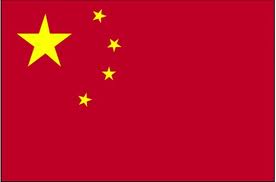
chinaflagIt’s been a rather depressing, or optimistic, week in China depending on how you view the Party’s latest not-so-subtle attempts to strangle free speech and the unusually vocal reaction to it.

It all began when propaganda chief of the southern Guandong province, Tuo Zhen, decided he didn’t like an already edited-for-his-pleasure New Year’s message in the liberal-leaning Southern Weekly and decided to re-write it, removing the bits calling for reform and adding his own anodyne intro.

Considering China’s hacks already conform to imposing censorship requirements, the editorial team got rather peeved at this blatant hatchet job and went on strike.

Messages of support from scholars, students – and maybe more importantly, bloggers and celebs with tens of millions of followers on weibo – followed as the stand-off between the hacks and the Party-influenced paper management continued.

An editorial in state-run rag Global Times playing down the dispute was ordered by the Party to be published in papers across the country, forcing the principled Dai Zigeng, editor-in-chief of the Beijing News, to resign after he refused to do so.

Undeterred, the BJ Daily, as it’s called by no-one, ran a fascinating article about porridge in defiance of the Party. Yes. Porridge. Read CMP here for the reason why porridge is now politically dissident (hint: It involves homophones and metaphors).

All of this can be set against the backdrop of incoming Party and national leader Xi Jinping’s crusade for reform and transparency. Xi has made it his mission to root out corruption in the Party and sent some pretty strong signals so far that this isn’t just an attempt to cement his popularity and power base.

So is this a particularly sad day for freedom of speech in China’s admittedly pretty sad history? It depends what you believe is going on here.

To take the pessimistic view one could see the message coming loud and clear from the new administration that no relaxing of the country’s tough censorship laws will be allowed, despite initial hope that the country’s new leaders would be a tad more liberal.

A leaked directive sent to all editors from the Propaganda Department would seem to confirm this depressing take on things, blaming as it did the usual mythical “external hostile forces” for the development of the Southern Weekly situation and stating unequivocally: “Party control of the media is an unwavering basic principle”.

Coming from another angle, however, there are signs of encouragement.

One couldn’t expect Xi to stamp his personal mark too quickly on the presidency and the Party, in fact, he’s not even sworn in as pres until March and Party-wise the incoming leader is usually hidebound for many months and even years before they can really take control.

This whole affair could rather be seen, as Beijing-based scholar Russell Leigh Moses argues, as the result of heavy-handed actions – perhaps even designed to deliberately disrupt Xi’s reformist push – of the old guard of the Party.

In addition, pro-democracy protesters were allowed to gather freely outside the Southern Weeklybuildings – although police took pictures of many in that rather sinister “we’ll be in touch later” way police sometimes do – for several days.

And in defiance of the Party, hugely popular internet portals such as that run by Sina published theGlobal Times editorial with the crucial caveat that it did not represent their views. Acrostics in unrelated headlines were also used ingeniously to spell out messages of support for Southern Weekly.

In short, I’ve absolutely no idea what’s going on in China, as usual, but there are signs, albeit hugely caveated ones, that some things may be changing across the border.

China, the land that political correctness forgot

22 Nov

dalian girlChina is a fascinating and unique country. So unique, in fact, that you can almost forgive its rampant racism, its quest for global economic pre-eminence at all costs, its many and varied human rights abuses and its citizens occasionally pooing on the subway. This is, after all, a nation-civilisation that has always thought of itself as the centre of the world – the Middle Kingdom – with the Western global hegemony of the past couple of centuries a mere blip.

In fact, one of the mistakes us round-eyes make when looking at the inexorable rise of the Orient is to try and appraise it on our terms, which are Western terms, and shoehorn it into our historical narrative, which is a Western one. (This intro-ramble, by the way is basically a disclaimer for the following words, which some may unhelpfully regard as me sneering at the Chinese. That was only partly the intention.)

I am energised, fascinated and slightly terrified by what’s going on across the border in the People’s Republic. Case in point, this article from state-run rag the China Daily (via some forum). Yes, it’s apparently a survey of foreign nationals in China ranking the nation’s cities according to how fit their birds are.

For the record, girls from Dalian in the north-eastern province of Liaoning, are the tops, apparently due to their superior height, fair skin and strength of personality. Those from south of the Yantze, it says, are more graceful and yielding, but don’t have much personality – which has surely been a problem for men the world over since the dawn of time.

According to the report, Nanjing girls are ‘cultural’, Beijing girls are ‘capable’, Shanghai girls are ‘pretty’, and Guangzhou girls are ‘realistic’ … and make good soup. Now, without wanting to sound too sexist here, would you go for the Page 3 Stunner from Shanghai or the hunchback offering you a bowl of shark’s fin in broth? Yeah, thought so.

I’m sure equally bizarre, hilarious and terrifying things are happening all over the world. But all over the world, unfortunately, is not here; the country which will be the undeniable global superpower for the next few hundreds of years and therefore set the moral and cultural agenda for others to follow. Oh well, when in Rome…

Andrea Yu: flack, hack, discuss

16 Nov

andrea yu hodgkinsonI was at the Foreign Correspondents’ Club’s 30 anniversary on Ice House Street last week. Now I do like to complain about the patchy Wi-Fi, the braying, ruddy-faced “it’s all gone downhill since ‘97” members and the lack of pork scratchings at the bar, but it’s actually pretty bloody good. Not only can you get sozzled for around a tenner – no easy feat in Hong Kong – but to be surrounded by faded images and clippings from some of the defining moments of the 20th century is pretty awe-inspiring for a hack. From the savage conflicts in Vietnam and Korean, to Nixon toasting Zhou Enlai and Mao and Chiang Kai-Shek celebrating after the Japanese surrender, the reportage scattered all over the walls of this venerable old building tell of brave journalistic deeds.

This long pre-amble is to put into context the rather depressing PR efforts of the Communist Party and the plight of one particular ‘journalist’ at the centre of the only interesting thing to happen during the Party Congress this week – Andrea ‘Yu’.

Now, Yu sprung to fame by virtue of being one of the few foreign journalists during the endless Congress press conferences to be picked by officials to ask questions. In uber-paranoid China, only hacks from the state-run press are usually called upon, because the Party would rather not open the floor to those who might asking challenging questions. However, it turns out Yu, much to the chagrin of other laowai journos at the event, was picked on four separate occasions to ask questions. Hmmm.

In her defence she told WSJ that she was chosen so frequently by virtue of sitting in the same spot at every press conference and by making direct eye contact with the moderator. Really? It’s that simple? Oh, no, there’s one other, minor reason why she kept on getting picked: her employer, Australia-based Global CAMG Media International, is actually majority owned by Chinese state-owned media, and her Chinese colleagues wrote all her questions down for her.

Thus, we were treated to gloriously incisive questions such as: “Please tell us what plans and policies the Chinese government will be implementing in co-operation with Australia.” Or how about the challenging: “After the 18th Party Congress, what policies and measures will there be to support overseas Chinese media to publicise and promote Chinese culture, to propel Australian-Chinese cultural exchanges to the next level?” Brilliant. Worthy of Paxman, that one.

If you want to hear the hapless Yu explain herself, prepare to cringe at the following interview with a real Ozzie hack.

I was undecided whether Yu was simply a naïve young hack who did her best – in fluent Mandarin and English, no less – at an intimidating event and with employers who expected a certain line of enquiry from her. And then I found out from Beijing Cream that her real name is actually Andrea Hodgkinson. How do we know? Because she is referred to thus on the cover of a Chinese magazine where she appears in a rather lovely dress. CAMG apparently tweeted a picture of that magazine cover, and then hastily deleted said tweet. Something to hide guys?

You may ask, with the entire weight of its state media to ask soft questions, why did the Party effectively get a foreigner on board to do exactly the same? Well, it’s all about cache, and seeing a white-face-round-eye serving up the kind of embarrassingly banal questions that make Charlotte Church look like David Dimbleby was all part of China’s ongoing attempts to legitimise its one party system and soften its image in the eyes of international onlookers. In its insulated, culturally homogenous cocoon the Party obviously believed it could get away with it – that no-one would notice or mind that it had hired an attractive young bilingual laowai to basically do its own PR.

At the FCC event last Friday, chief secretary of the Hong Kong government, Carrie Lam, spoke eloquently and passionately about the Club, about Hong Kong and about the importance the new administration attaches to press freedom. Seeing what happened across the border this week makes those words even more telling. If ‘Yu-gate’ was to be the first salvo in the new Party leadership’s soft power media efforts, then let’s hope this initiative at least has been well and truly raped in a ditch.

Atmosphere, I love a Party with a happy atmosphere….*

9 Nov

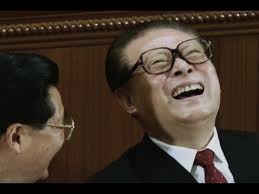
jiang zemin laughingHong Kong is bracing itself for an influx of bewildered mainland Chinese searching for pencil sharpeners, kitchen knives and balloons, if reports about the 18th Communist Party Congress are to be believed.

Yes, it’s the carefully choreographed, once-every-five-years PR exercise this week, and as usual in China, the Party officials are out to stage manage the event down to the last detail.

Even for an institution that’s institutionally paranoid – how else do you rule a land mass the size of China, with a population over 1 billion for more than 50 years? – the Party Congress takes paranoia to a whole new level.

First there’s the obligatory internet clamp down, which has prevented discussion about anything remotely politically sensitive, blocked several foreign media outlets’ web sites, and even interfered with VPNs – which for those in the know is the only way to circumvent the Great Firewall and access banned content.

However, this year’s affair has also given rise to some rather unusual extra precautions.

Taxi drivers in Beijing have been ordered to remove all passenger window handles and keep them firmly locked, and told to keep an eye out for anyone carrying balloons or ping pong balls.

The reason, apparently, is to prevent said items being distributed with reactionary slogans drawn on them. That, as we all know, is how the French Revolution started.

Toy airplanes have also disappeared from the shelves of Beijing stores – presumably to prevent some kind of tiny 9-11 happening to Communist Party HQ, and pigeon fanciers have been told to keep their birds locked up – this was apparently an old school, pre-internet way of sewing political dissent.

The sale of knives has, a little more understandably, been banned for the week – leaving budding chefs in need of a new Sabatier in the lurch – and the edict has been rather excessively applied to all blades, including pencil sharpeners.

Evil bastards, pencil sharpeners, I once saw a man mugged by one in Brixton…

Finally, the inappropriately named Ministry of Culture has reportedly cancelled a US amateur production of To Kill a Mockingbird. Needless to say, the group performed in Hong Kong with no adverse effect on the political stability of the region.

* Yes, this actually happened. We are all responsible.

Welcome to Shenzhen – where the pollution comes from

20 Sep

Shenzhen skylineI had the honour of a few days in Shenzhen this week. For those of you who don’t know, Shenzhen is Hong Kong’s younger brother across the border in mainland China, about an hour’s MTR ride away. He doesn’t suffer fools gladly, he’s brash, dirty, full of money he doesn’t know what to do with but on the plus side has a very clean and efficient metro system. That last one was just about the city.

Shenzhen is the product of former Communist Party supreme leader Deng Xiaoping’s vision to liberalise a country brought to its knees by his boss for so many years, Mao Zedong. Deng’s idea was to set up Special Economic Zones which would act as a kind of canary down the mine and see if the Communist state could pull off the immense balancing act of maintaining its totalitarian rule while allowing capitalism to thrive. In just 30 years the small village on the Pearl River Delta grew to a city of 14 million. Yeah, you could probably say it worked.

Except, arriving in Shenzhen from Hong Kong, it definitely hasn’t. It’s provides a horrifying insight into the kind of cities dotted all over the People’s Republic – all mouth and no trousers. So bereft of any cultural history it makes Hong Kong look like Kyoto. Actually, it make Vegas look like Kyoto.

What it does have, however, is shitloads of fake stuff. From knock off iPhones to Gucci handbags, it can be a shopper’s paradise, which is ironic considering most mainland Chinese come to Hong Kong to shop for their label goods because of the lower tax there. That’s legit stuff though, this is most definitely tat with a capital T. Just don’t expect much of it to last.

Don’t go to Shenzhen either for a gourmet experience of the ‘real China’. The restaurants I ventured in – and I went to some pretty swank ones – were universally dreadful. All of them smelled very strongly of fetid antisceptic wash and stale smoke, food arrived barely warm and just not right. Maybe I am too programmed into Hong Kong’s niceties. Or perhaps I was immediately put off the place by getting embroiled in the middle of a massive anti-Japan protest as soon as I stepped of the metro.

I’ll give the Chinese something, though, they know how to run a police force. This lot made Judge Dredd look like that bender from Allo Allo. All kitted out in the latest riot gear – I would have taken a few pictures but was quite frankly terrified. So, in recap, if you want to find out why you can’t see from one side of Victoria harbour in Hong Kong to the other if the wind’s blowing the wrong way, take a trip to Shenzhen. If not, well…

China vs Japan – which is better? There’s only one way to find out…

25 Aug

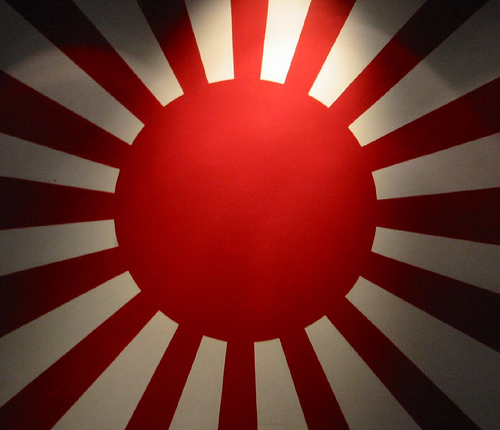
japan imperial flagYou might have heard recently about a bit of diplomatic aggro between China and Japan. I say a bit. I mean what may in 20 years’ time be referred to as “the origins of World War Three”. As with most disputes in Asia Pacific, it revolves around a disputed set of rocks. Literally little more than jagged stubs of nothingness poking wilfully out of the deep, shouting “claim me, if you DARE!”.

Now, you might hear a lot of nationalistic posturing on both sides about their rightful claims, but here’s the deal. I can pronounce the islands in Japanese – Senkaku, since you ask – while I have more difficulty, as with most words, with the Chinese Diaoyu. This, in my book, means Japan wins by default – if half the planet can’t pronounce the pesky name then you forfeit sovereignty rights … is the new rule I’ve just made up.

Ironically in this instance, and for about the first time in such disputes, I think China probably has the more valid claim. If you look on the map, the disputed lands are bloody miles away from Japan – Taiwan has a pretty valid claim on them too, but definitely not Japan. I say ironically because China claims just about everything in the South and East China Sea because it has an old map with all of these islands, atolls, reefs and sandbanks depicted as belonging to the Middle Kingdom.  Not very convincing if you ask me but who’s going to argue with China? Well, Vietnam, the Philippines, Taiwan, and Japan, now that there are signs that there could be precious minerals or even gas and oil under the crabby bits of rock.

As tensions mounted over the Senkaku dispute, a boat full of Chinese and Taiwanese activists sailed off from Hong Kong to plant the Chinese (and Taiwanese) flags on them. Now I found this propaganda stunt particularly, err, fishy given that Hong Kongers in my experience do not consider themselves to be a part of that whole Chinese territorial posturing nonsense. Yes, they may feel ethnically aligned to their cousins across the border, but when it comes to geopolitical matters, they would rather remain aloof of China’s insatiable land grab. They are happy in their difference from the PRC because it means they can hang on to things – rule of law, press freedom, financial independence, freedom of speech etc etc – that mainland Chinese can only dream of.

The whole thing smacked of a Communist-sponsored PR stunt – making sure the activists came from Hong Kong to distance the act itself from the PRC, but still showing Japan that the government has popular support for its territorial stance.

Anyway, long story short, no-one in this or any of the Asian maritime squabbles that have erupted over the past few months have particularly covered themselves in glory. What there needs to be is some kind of international arbitration in all this, some kind of union of nations which could decide on who gets what. A United Nations, if you will. Oh, wait a minute. There is.

China’s obsession with porn: what a colossal waste of time

2 Aug

XXXChina is truly a unique nation and no-where is this more evident than its nonsensical attitude to pornography.

Yup, since the People’s Republic was founded in 1949, the production, distribution and consumption of any smutty content has been illegal, but why?

If you look at all the countries of the world, the ones which have restrictions on such material 99% of the time do so because of religious reasons – or religion masquerading as morality. Indonesia, Pakistan, India, Iran the list goes on and on for a depressingly long time, with the majority of oppressive regimes located here in Asia.

Then we come to China – a nation where religion is barely tolerated by the Communist Party. Just ask the Falun Gong, a religious sect hounded out of the country as a “heretical organisation”, or the Muslims of Xinjiang Province, who have been told this month that they cannot fast during Ramadan.

The Party’s not keen at all on organised religion yet behaves in a quasi-religious way towards pornography.

Just this week, Chinese police smashed a massive porn site and arrested over 2,000 unlucky punters. Many of them will get let off with a warning but this will mean serious jail time for the site admins.

Ironically, the site, which had been going since 2009, was only discovered after a nosy Mum decided to find out why her son’s high school grades had taken a sudden turn for the worse…

What a colossal waste of everyone’s time. Seriously. Can you imagine the police hours involved in the three-month investigation, which spanned the entire country?

And for what? So the Party can prove once again it is protecting the moral health of the populace?

In reality, it often uses porn – lumped in with internet fraud, gambling and malware – as an excuse to ‘clean up the web’ periodically. The real target in these clean up initiatives is usually political opponents of the Party or just general troublemakers.

Surely the Party is missing a trick here. A wank-happy population with a steady supply of porn is far less likely to rebel against its masters than one deprived, agitated and excluded, seeking out underground forums like the site recently shuttered.

If religion used to be the opiate of the people, then today surely it’s internet porn.

We need to get organised on this people because one day China is going to rule the world, and I for one worry about the future…

Beijing and Hong Kong – a week of storms

30 Jul

typhoonYou might have seen there’s been a spot of rain in China over the past week or so. I don’t think it would be exaggerating to say it was absolutely twatting it down. The most interesting thing about Bejing’s deadly floods and Hong Kong’s rather camp typhoon, however, is the damage each did and how the authorities handled the aftermath.

I’m not going to launch into another China-slagging post here because the facts pretty much speak for themselves. The ‘worst floods in six decades’ hit Beijing. Apartment ceilings caved in, inadequate sewers and drainage systems collapsed, 70+ people died. How can 70 people die in 6.7 inches of rain? Well, that’s what millions of angry social media users wanted to know, and let their anger at local government be known via the usual weibo channels. Until the posts began, sadly and predictably, to be deleted. Almost a year to the day after the deadly high speed train crash which sparked a weibo backlash over government incompetence, the authorities’ response is still to censor first, think later.

In what seemed like an unusually speedy response to public opinion, Beijing’s major and deputy resigned. However, read between the lines, and Communist Party politics, and the deadly floods were more likely being used to justify a decision which had already taken place in a closed door Party meeting. many moons previously. No-body’s sure exactly why they went so quickly, they just know that it wasn’t an honourable mea culpa.

Cut to Hong Kong a few days later. I looked out of my window at 3pm and saw sideways rain. At about 5pm office workers were told to go home as typhoon Vicente was coming to play, and a no. 8 signal hoisted. Later that night, as the wind grew, a no. 10 signal was raised, forewarning 100mph winds, a near direct hit and the worst storm since ’99. So what happened? Death and destruction? Organisational chaos and government turmoil? Nope. A bit of flooding. About 100 injuries from flying debris. Delayed trains. All was back to normal by about midday the next day.

Oh yeah, and we were all allowed to tweet and weibo about it. Not that there were many complaints – a few people got stranded on MTRs, but nothing too extreme.

Now I know it’s not really fair to compare the two extreme weather conditions, or the two cities. And I know that it’s perhaps unfair to judge Beijing’s local government based on this incident, given they endured a spectacular drenching for a city normally more used to sandstorms and smog. But I’m gonna anyway. Beijing’s big play at the 2008 Olympics was “I’m here, I’m queer”…no, hang on.  It was more: “I’m a modern, global capital. I have the money, the infrastructure and the balls to shake things up around here. Gaze on me with envy London, New York, Berlin. I’m the shit. Yeah.”

Except it was bluffing. As with China as a whole, it grew at such a pace of knots that a lot of the important stuff was forgotten: human rights, environmental protection, the rule of law … proper drainage. We can sit back all smug in the West, and especially in London, as it hosts this year’s Olympics. We’ve had our industrial revolution. Hong Kong too has come through its steep learning curve and thanks to international finance, British know-how and Chinese industry is now one of the best places to live in the world.

The Chinese govt will surely throw billions at Beijing in response to what happened last week, but whether on purpose or not, vital stuff will still get missed off that list.